FMB BriefThe daily newsletter from FMB News
The Philippines is slowing in places that matter, while the world is getting more expensive to insure, finance and power.
Domestic trade volume fell 37.9% in the second quarter, the Duterte impeachment trial resumed, inflation remains high, Hormuz is still distorting energy flows, AI valuations and infrastructure costs are climbing, and Ukraine is asking Europe for more air defence.
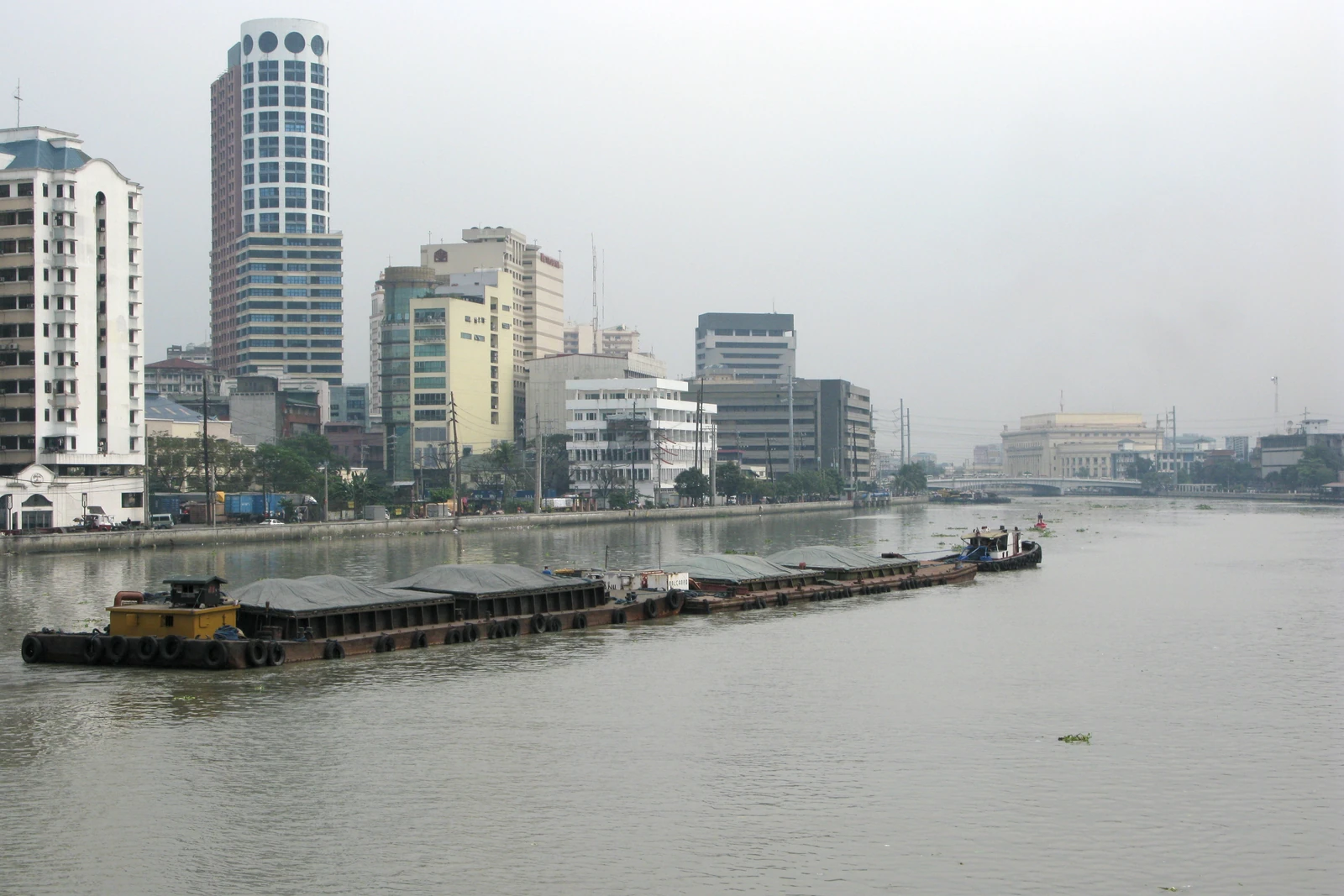
The new domestic-trade numbers are weaker than the GDP headline alone suggests.
The Philippine Statistics Authority reported today that domestic trade volume fell to 10.57 million tons in the second quarter of 2026, down 37.9% from 17.02 million tons a year earlier. The value of domestic trade fell 21.9% to ₱745.70 billion from ₱955.18 billion.
The weakness was concentrated in water transport: commodity volume moved by water fell 56.7% year on year, while the value of waterborne trade dropped 56.0%. Road trade volume also declined 18.1%, although its value increased 9.8%.

Domestic trade is not identical to domestic demand, and the PSA release is preliminary. But a collapse of this scale in the movement and value of goods deserves attention because logistics, production, inventory and regional commerce sit underneath consumer activity. It reinforces the message from weak Q2 GDP: the economy is not merely growing slowly on paper; important channels of internal movement are softer too.
The Duterte impeachment trial is back in session, and the confidential-funds record remains central.
The Senate impeachment court resumed its 17th trial day on August 24 after weather disrupted proceedings last week. Former Office of the Vice President special disbursing officer Gina Acosta, who has been declared a hostile witness, was scheduled to continue direct examination by House prosecutors over the alleged handling and disbursement of confidential funds.
Vice President Sara Duterte denies wrongdoing. The proceeding remains politically consequential because a conviction could remove her from office and disqualify her from future public office.
The trial has moved beyond opening arguments into the harder evidentiary phase. That is where political narrative starts colliding with records, witness credibility and procedure. The strongest coverage should separate what prosecutors allege, what witnesses establish, what the defense disputes and what the court ultimately accepts.
Iran’s oil relationship with China is becoming the next sanctions stress test.
Reuters reported today that looming U.S. sanctions are putting China’s purchases of Iranian crude under renewed scrutiny. Iranian shipments to China fell to about 534,000 barrels per day in August from 823,000 bpd in July, even though Chinese independent refiners remain major buyers.
The wider energy problem has not disappeared. Companies are still paying heavily to move some cargo through the Strait of Hormuz, while producers and traders invest in alternative routes around the waterway. Brent remains above $90 a barrel.
The risk is not only crude oil. Expensive shipping, insurance and refined fuels can feed transport, food distribution, aviation and the peso. With Philippine inflation still at 6.2% in July, another sustained energy shock would tighten the BSP’s room for manoeuvre.
The AI story is splitting into two: enormous demand and increasingly uncomfortable capital costs.
U.S. technology and semiconductor shares weakened Monday as investors weighed Iran sanctions, higher policy uncertainty and the cost of the AI buildout. Reuters also reported that Nvidia is in discussions to invest in Perplexity at a valuation above $30 billion, more than 50% above the startup’s previous valuation.
Perplexity’s annualized revenue has reportedly climbed above $750 million, but the broader market is increasingly asking how quickly AI revenue can justify the spending on chips, servers, data centers and power.
The strongest AI companies may still create enormous value. But the market is now forcing a more useful question: which products generate enough revenue, productivity or strategic advantage to justify the physical infrastructure beneath them? That is the same question Philippine founders should bring into Echelon Philippines on August 25–26.
Ukraine used Independence Day to ask Europe for more than solidarity.
Britain and France pledged stronger military and technological support to Ukraine on August 24 as the country marked Independence Day. President Volodymyr Zelenskiy said Ukraine urgently needs more Patriot interceptors and additional sanctions against Russia, while the European Commission approved another €6.1 billion for Ukrainian defence.
Separate talks over a possible ceasefire on attacks against Black Sea grain shipping remain stuck. Zelenskiy said Russia wants any arrangement to include a halt to Ukrainian attacks on Russian refineries and energy infrastructure.
The war is increasingly a contest of industrial and financial endurance. Air defence, missile production, energy systems, refineries and export routes are now as important to the long-term balance as territorial movement on any single day.
El Niño is no longer a distant forecast. It is a planning constraint.
PAGASA says a weak to moderate El Niño is present in the tropical Pacific and is likely to intensify and persist through the first half of 2027. Its current guidance assigns a 57% probability of strong conditions during the July–August–September season and an 81% probability of a very strong event later in 2026.
PAGASA is already advising farmers to conserve water, maintain irrigation, harvest rainwater and consider drought-tolerant crops. The agency also cautions that western parts of the country may still receive heavy Habagat rainfall even while El Niño raises drought risk elsewhere.
A strong El Niño is not just a weather story. It can become a food-price, water, electricity, agriculture, health and inflation story. The valuable response begins before reservoirs and farms are already under stress.
What FMB should watch
The next decisions are now visible.
BSP: watch the August 27 monetary-policy decision and, more importantly, the language around inflation versus weak growth.
Domestic trade: watch whether the Q2 collapse in internal goods movement persists into Q3 or proves temporary and transport-specific.
Duterte trial: watch the evidentiary record, not only political reactions. Witness testimony and documentary proof now matter more than positioning.
Hormuz: watch actual vessel traffic and refined-fuel availability, not just Brent.
AI: Nvidia earnings and Echelon Philippines will test the same thesis at different scales: can AI revenue justify AI capital?
Ukraine: watch whether European pledges translate into air-defence deliveries before winter.
El Niño: watch reservoir levels, agriculture advisories and early food-price pressure.
Sources and method
FMB Brief prioritizes primary Philippine data, official records and high-quality international reporting. Today’s Philippine economic data came from the Philippine Statistics Authority; climate guidance from DOST-PAGASA; event information from Echelon Philippines; political trial updates from INQUIRER.net with Reuters background; and international energy, markets, AI and Ukraine developments from Reuters. Facts and analysis are separated explicitly, and categories are omitted when no development clears the consequence threshold.