Impeachment Desk: No verified material change this hour.
What happened
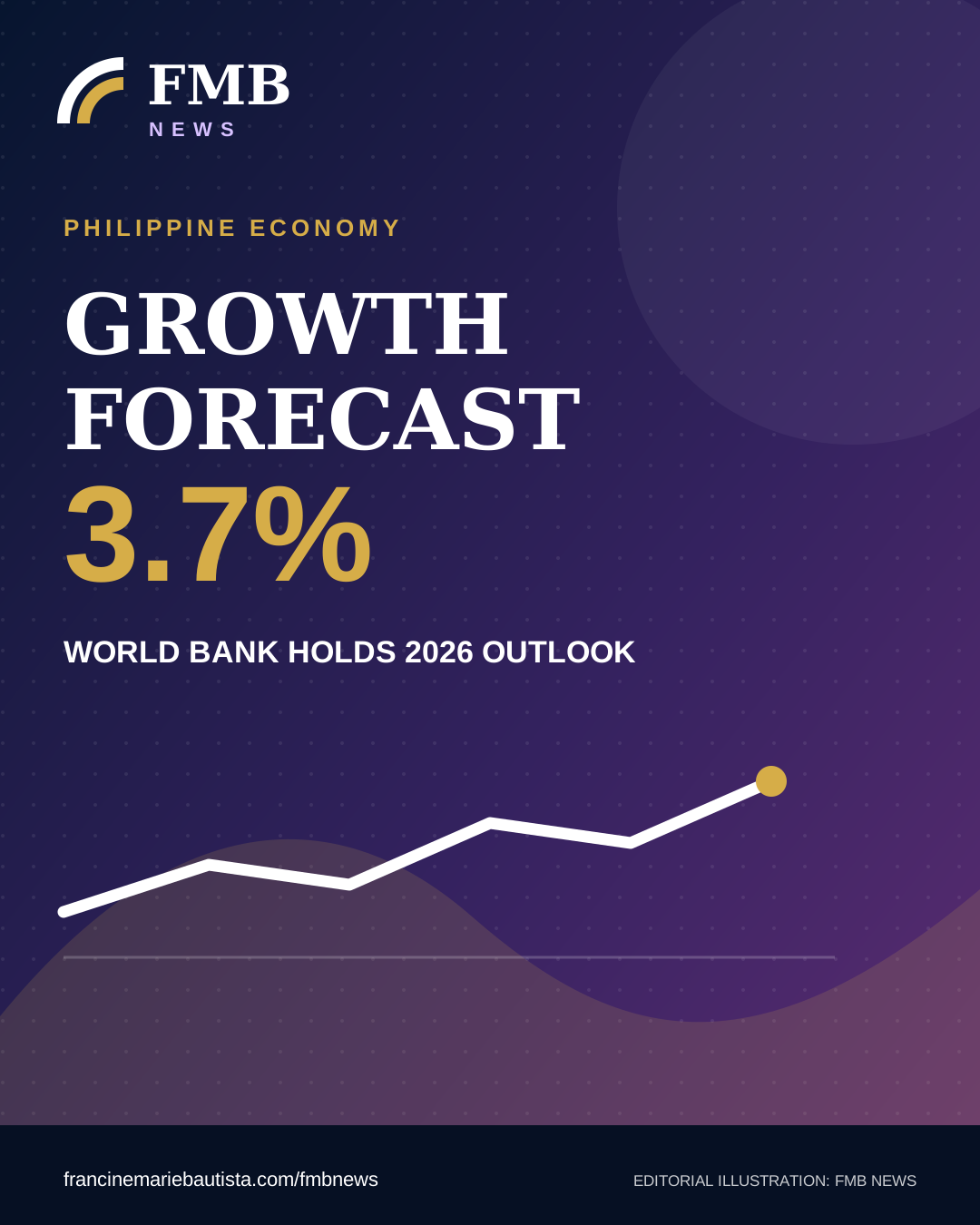
The World Bank maintained its forecast that the Philippine economy will grow by 3.7 percent in 2026. It expects growth to recover to 5.2 percent in 2027 and 5.5 percent in 2028. The 2027 estimate is lower than the 5.6 percent forecast issued in June, signalling that the institution now expects the recovery to take longer.
Why growth has slowed
World Bank officials pointed to weak investment, constrained household consumption and high energy costs. The economy expanded by only 2.8 percent in the first quarter, while delayed budget approval and the wider Middle East conflict added pressure. The government’s own 2026 target range is 3.5 percent to 4.5 percent.
Inflation and the peso remain central risks
The World Bank expects inflation to average 5.8 percent in 2026 before easing to 5.2 percent in 2027. Peso depreciation has made imported fuel, food inputs and other goods more expensive. Government economic managers earlier projected the peso at 60 to 62 against the United States dollar over 2026 to 2030. Forecasts are estimates, not guarantees, and can change as energy prices, exchange rates and public spending move.
What the headline number does not show
Gross domestic product measures the size and movement of the economy, but it does not automatically tell families whether wages are keeping up with prices or whether growth is reaching poorer provinces. A 3.7 percent expansion can coexist with weak purchasing power, uneven job quality and delayed infrastructure. The public-interest test is whether recovery produces stable work, affordable essentials and functioning public services.
Why It Matters to Us, Filipinos
A slower recovery affects hiring, business expansion, government revenue and the cost of borrowing. Small businesses may delay investments when electricity, transport and financing remain expensive. Families may continue cutting non-essential spending when food and utility bills rise faster than incomes. The forecast also increases pressure on government to restore confidence in public investment and ensure that infrastructure money is spent efficiently and transparently.
Key lesson
The 3.7 percent forecast is not a verdict that decline is inevitable. It is a warning that growth will not accelerate through announcements alone. Reliable energy, credible public spending, stronger investment conditions and inflation control must work together.
What happens next
Readers should watch second-quarter growth data, inflation, central-bank decisions, the pace of government infrastructure spending and changes in the peso. A stronger rebound would require evidence that investment and consumption are recovering without creating another surge in prices.
SEO title: World Bank Holds Philippine 2026 Growth Forecast at 3.7% | FMB News
Meta description: The World Bank kept its Philippine growth forecast at 3.7% for 2026 and cut its 2027 outlook as inflation, weak investment and costly energy weigh on recovery.
Keywords: Philippine economy, World Bank, GDP growth, inflation, peso
Facebook caption: The World Bank kept its Philippine growth forecast at 3.7 percent for 2026, but lowered its expectation for next year. The deeper question is whether recovery will reach Filipino households through better jobs, stable prices and credible public investment.
Pubmat text: PHILIPPINE GROWTH FORECAST HELD AT 3.7%
Photo credit: Editorial illustration: FMB News.