
Profile article
Early life, pageantry and a life shaped by service
Francine Marie Bautista's public work did not begin with a company or a digital platform. It grew from Masinloc, from school, from pageantry, and from the belief that visibility should eventually become service.
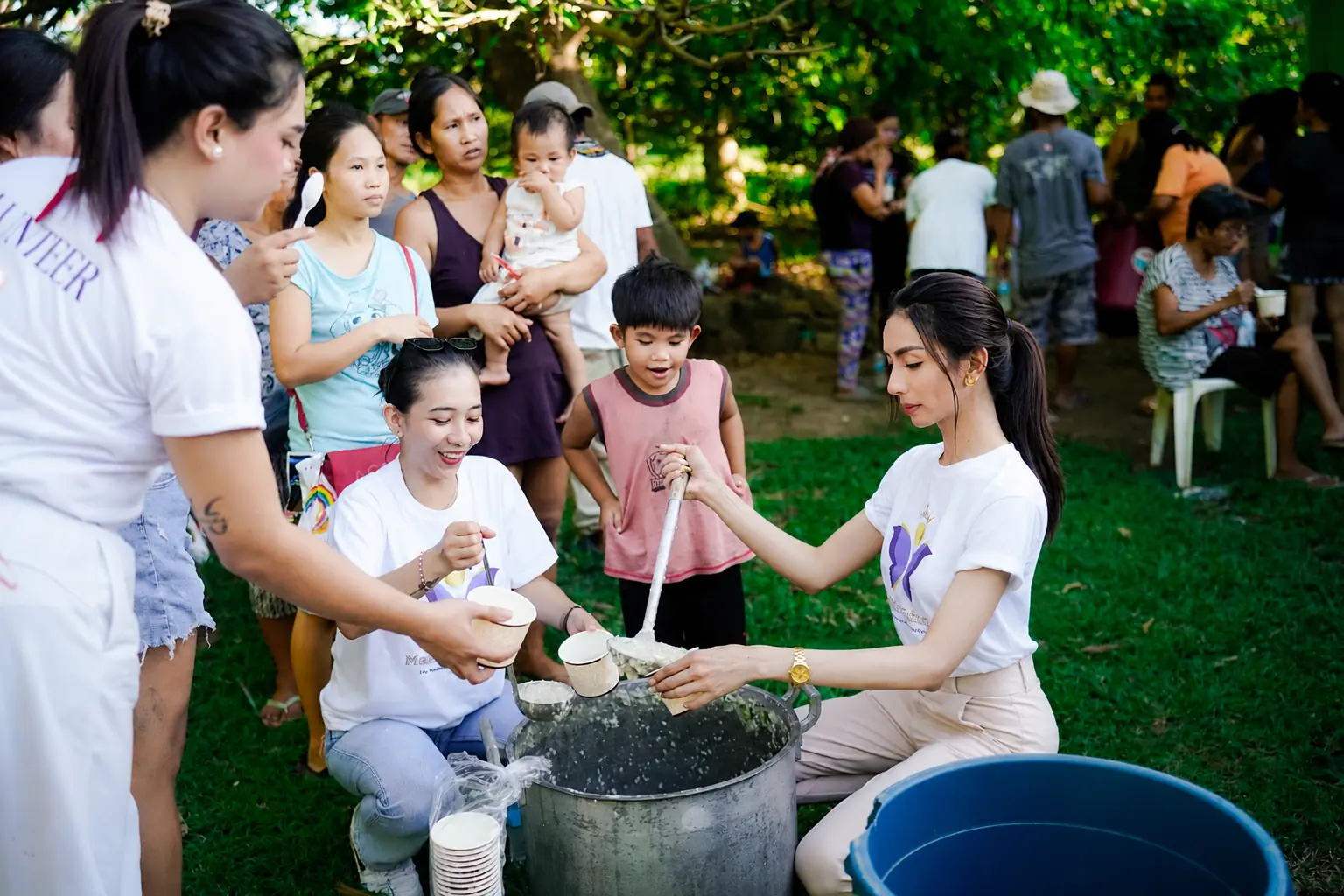
Francine Marie Bautista participating in a community service activity with volunteers.
Early life and education
Rooted in Masinloc
Bautista was raised in Masinloc, Zambales, a coastal town whose people, language, history and everyday life would later become central to her cultural and advocacy work.
She studied at San Andres School of Masinloc during her early education. Her connection to Masinloc later shaped projects focused on local identity, tourism, community memory and Sambal Tina language preservation.
She is pursuing graduate study in History at the University of the Philippines Baguio, with an expected completion in 2028. Her historical studies support her work in cultural research, local memory, identity and heritage preservation.
Pageant journey
Pageantry became a public classroom
Bautista's pageant journey gave her early experience in public speaking, presentation, performance, visual identity and audience perception. She appeared on national television through ABS-CBN's It's Showtime as part of the Miss Q&A segment and later continued participating in pageants and related public events.
Her experience allows her to be described as a former beauty queen and pageant alumna, while specific titles and placements should always be stated only when they are supported by official event records.
Pageantry became more than competition. It became a practical education in branding, pressure, reinvention, confidence and the responsibility that comes with being seen.
For Bautista, visibility is most meaningful when it can be converted into dignity, opportunity and service.
Advocacy
From representation to direct community work
Her advocacy work spans women, LGBTQIA+ people, mental health, cultural preservation, language, education and community development. These interests are expressed through initiatives including With Love, FMB, Mabayani, Yoni and The Cognita Institute.
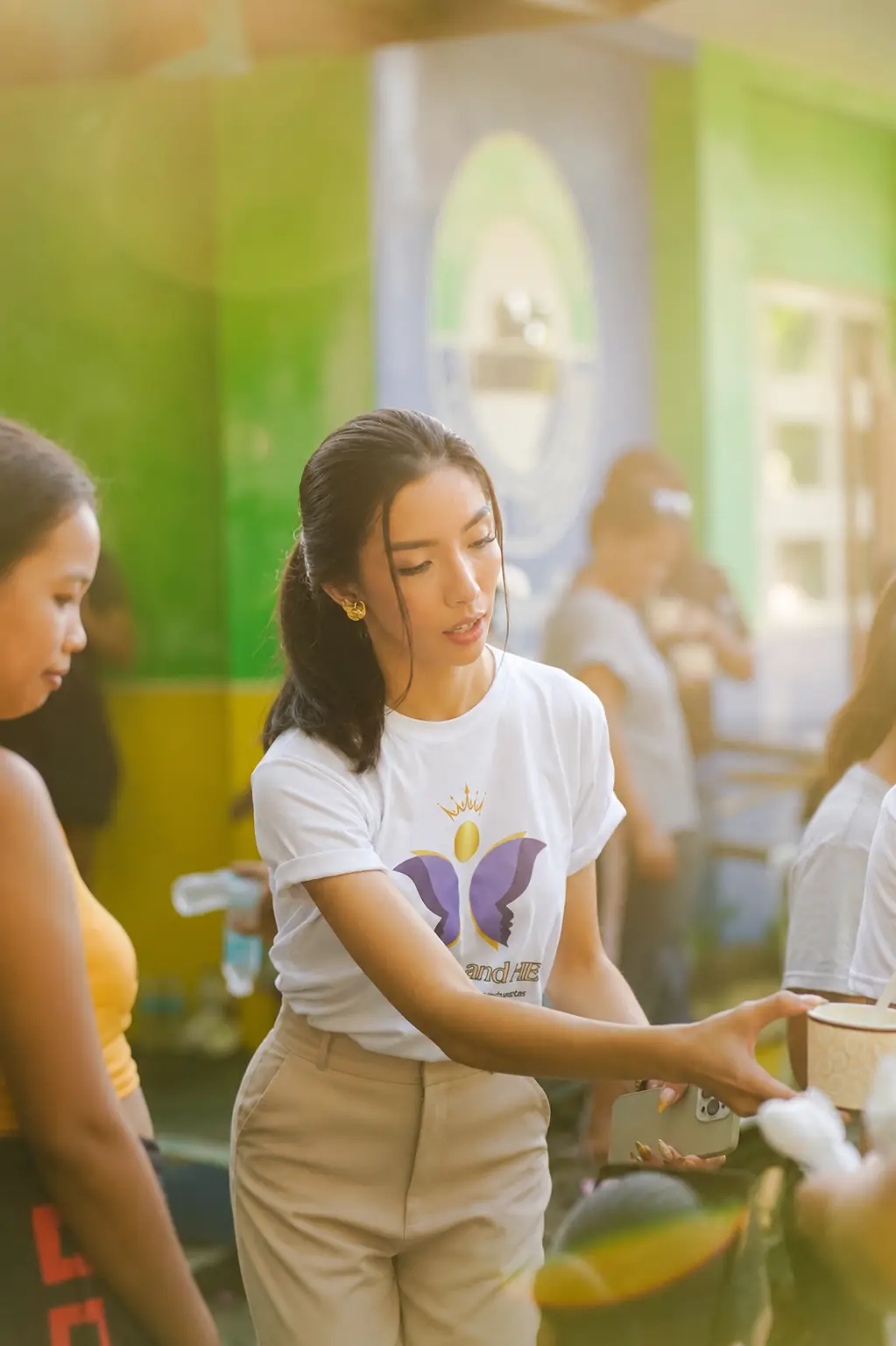
Her community orientation is also visible in direct service activities. The accompanying photographs document Bautista working with volunteers and community members during food preparation and distribution.
The work reflects her stated principle of service to humanity: not service as a slogan, but as a practice that asks leaders to be present, useful and accountable to the people around them.
Continuing direction
A public identity built around usefulness
Bautista's work now moves across creative direction, strategic communications, photography, entrepreneurship, education, culture and technology. Although the disciplines differ, the underlying idea remains consistent: help people, communities and ideas become clearer, better represented and harder to overlook.
Her early life in Masinloc, education, pageant experience and advocacy are not separate stories. Together, they explain why her work repeatedly returns to identity, visibility, dignity and public service.
Related profile: Francine Marie Bautista (FMB) · Official page: About FMB