
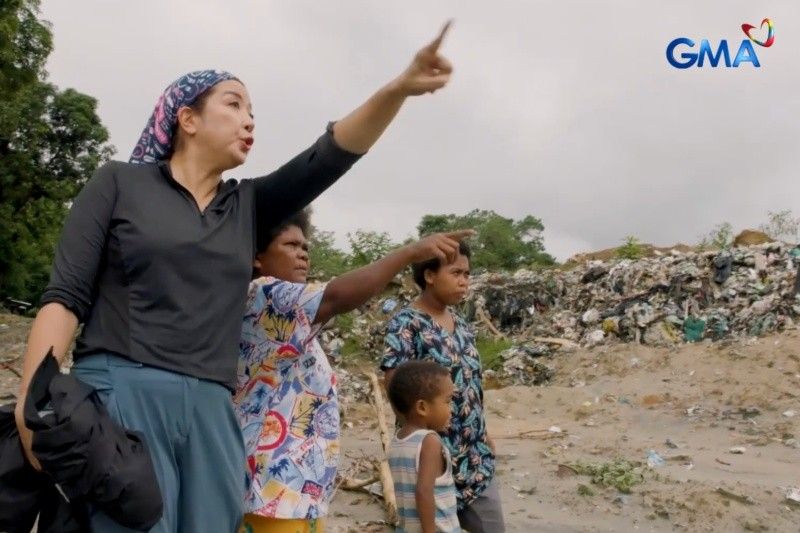
The order to stop dumping in Sitio Tibag is important. It is not the same as restoring what was damaged. Environment Secretary Juan Miguel Cuna said the Department of Environment and Natural Resources had issued a cease and desist order against the waste facility in Barangay Naugsol, Subic, Zambales. He also said dumping had stopped and that accumulated waste was beginning to be moved to an authorized sanitary landfill.
The site sits within an Aeta ancestral domain. It drew national attention after the I-Witness documentary Ibinasurang Paraiso showed families beside a landscape filled with municipal waste and raised questions about water, consent, and years of delayed enforcement.
What the closure means: New dumping is supposed to stop. It does not prove that all waste has been removed, that soil and water are safe, or that responsibility has been established. A Senate resolution requesting an inquiry is also not a finding of guilt.
What the public record says
Philippine News Agency reported that Senator Robinhood Padilla filed Senate Resolution 513 seeking an investigation into the reported use of the ancestral domain as a dumpsite. The resolution asks who was responsible, how the area should be rehabilitated, and whether protections for Indigenous Peoples need to be strengthened.
The same report says the resolution traced dumping to 2019 and cited a DENR investigation in 2022. Residents told the documentary and public officials that their primary water source had been contaminated. That is a serious allegation, but it should be described accurately: FMB&CO. News did not find publicly released laboratory results that establish the present condition of the community’s water.
Philstar Life reported that the transfer of accumulated waste had begun and that a facility in Floridablanca, Pampanga, was being considered for material that would otherwise have gone to Subic. Moving waste to an authorized site may stop further damage in Sitio Tibag. It does not answer how the original location was selected, why earlier orders did not produce a complete cleanup, or who will pay for long-term rehabilitation.
A closure order can stop the next truck. Only transparent restoration can begin to repair the harm already left behind.
The water question cannot stay vague
Water safety needs evidence, not reassurance. Independent sampling should identify the testing locations, dates, contaminants examined, laboratory, detection limits, and results. The community should receive the findings in language it can use, not only in a technical report placed far from public view.
Testing should cover drinking sources, surface water, groundwater where relevant, and leachate pathways around the waste mass. One clean sample would not settle a problem that may change with rainfall and groundwater movement. A monitoring schedule matters as much as an opening test.
Five answers Subic still owes
- How much waste remains, what kinds of waste are present, and where each load will go.
- What current soil, surface-water, and groundwater tests show, with the full results made public.
- Who authorized, operated, inspected, and funded the site across its years of reported use.
- What rehabilitation plan, budget, timetable, and measurable completion standard will apply.
- How the Aeta community will participate in decisions affecting its ancestral domain, water, health, and livelihood.
Republic Act 9003 prohibits open dumpsites and requires ecological solid-waste management. Republic Act 8371 protects the rights of Indigenous Cultural Communities and Indigenous Peoples to their ancestral domains. Those protections become meaningful only when enforcement reaches the land and the people the laws were written to protect.
Francine’s perspective · Opinion
As a Zambaleña, I do not want the closure announcement to become the ending.
A truck leaving the mountain does not restore the mountain. A cease and desist order does not return safe water. The measure is whether the families of Sitio Tibag can see a verified cleanup, participate in every decision, and receive clear answers about who allowed this to continue.
Ancestral land is not empty simply because somebody with power does not see a subdivision or a commercial building on it. It holds memory, food, water, livelihood, and belonging. That deserves respect before convenience.
I want Subic, and all of Zambales, to be known for beauty with discipline and progress with decency. We cannot call a solution practical when its cost is quietly placed on people who had the least power to refuse it. Stop the dumping, yes. Then test, remove, restore, disclose, and listen.